Title of the Research:
Moving Image and the Somatic Self – embodiment processes as creator, performer and spectator, at the intersection of moving image and performing art
Theme of Research:
film as somatic potential; embodied film; choreographic moving images and somatics; bodily empathy and moving image
Professional Background:
As a dancer and choreographer, I first encountered somatic methods in 2010/11 at the Budapest Contemporary Dance Academy, later within the training program of the ArtMan Association, and subsequently through my collaborative work with Ferenc Kálmán. Of the various approaches I’ve been introduced to, it was the somatic school of Body-Mind Centering® (BMC®) that resonated with me most deeply, and it is this method in which I have immersed myself.
Somatic schools and methods work through processes of first-person experience – inviting practitioners to explore through their own bodies and to tune into these bodily experiences. In other words, they support the awareness of bodily sensations and the integration of sensed impulses into movement. In the case of BMC®, the aim is to support the embodiment of anatomical and developmental knowledge – its actual experience through the body. This integration into and through movement helps facilitate a more fluid and diverse use of body and space.
Personal Interest in the Theme:
My core interest in this field has essentially remained the same since 2013, when I created my solo Atlasz bennem (The Atlas in Me). It is about transitioning from the mind into the body, from concept into sensation – giving space to visceral experience, intuition, and a form of authenticity that cannot exist without a body that is genuinely, personally experienced. I have been (and still am) searching for something that lies beneath and beyond consciousness – a way of bypassing everyday awareness. Or, to use the BMC® framework: a connection with the intelligence and wisdom that resides on the cellular level, within each bodily tissue.
Although my initial entry point into the somatic field came through an applied context – specifically the project SPARKS – Somatic Practices, Art and Creativity in the Field of Care (2013–2015), which had both therapeutic and socially engaged dimensions – I now see the essence of somatics as extending far beyond specific applications or target groups.
For me, somatics is a universal human path. It supports deeper connection with ourselves and with others – independent of individual abilities, social roles, or circumstances – and it nourishes us as creators, performers, and spectators through the lived experience of the body. It is a state of embodied consciousness: simultaneously physical and transcendent. It is radical, yet not aggressive.
For now, it is still easier to experience than to write about. And I carry the fear that my words might empty out the experience rather than illuminate or open it. Still, this is my hope – that my words and my artworks may serve as invitations.
Doctoral researcher: Bernadett Jobbágy
Affiliation: Hungarian University of Fine Arts Doctoral School
Supervisor: Réka Szűcs, DLA
External corporate expert: Miklós Lendvay
Time frame of the Artistic Research: 2021 – 2025
Beyond the somatic background, three other areas are integrated in the research process:
Contemporary Contexts and Communities Relevant to My Research
Past Influence:
The ArtMan Association for the Arts and Movement Therapy is the professional environment in which I actively worked between 2013 and 2023 as a movement group facilitator, performer, and choreographer, among excellent somatic professionals. On one hand, this space primarily served as a platform for inclusive work. On the other, through years of close collaboration and friendship with Ferenc Kálmán, it became a gateway to the somatic school of Body-Mind Centering®. Later, my creative and co-facilitating partnership with Andrea Mészöly also became a defining connection. I am no longer a member of ArtMan since 2023, but I continue to carry forward the imprint of the ten years of professional work I spent there.
Present:
In recent years, the SZOME – Association for Somatic Education and Movement has become an increasingly important contemporary professional context for me, as well as the ongoing dialogue with its members. The association, founded in 2021, consists of movement professionals – including myself – trained in various somatic approaches, and represents the younger generation of somatic practitioners in Hungary, many of whom are also active in academic and artistic fields.
Another key intellectual and somatic community for me is the tai chi and qigong practice led by Gábor Goda (Artus Studio), which has been part of my life since 2016, as well as the personal mentorship and qigong training received from Szilvi Izsák. Since 2013, the international Body-Mind Centering® scene – and more specifically, the European BMC® network of professionals and practitioners – has gradually become more accessible to me. My journey with BMC® took a significant turn in 2022, since which I have been practicing and applying the approach with increasing commitment. Influential teachers on this path include: Ferenc Kálmán, Bonnie Bainbridge Cohen, Walburga Glatz, Friederike Tröscher, Nina Wehnert, Odile Seitz, Mari Mägi, Stefanie Hahnzog, Olive Bieringa, and Jens Johannsen. Since 2025 (late 2024), the chi kung practice within the “Kell gyakorol” community led by Tamás Leél-Őssy and the women’s Tao chikung exercises taught by Gabriella Fenesi have also become part of my daily life.
Regular monthly consultations with my supervisor Réka Szűcs and external expert Miklós Lendvay also represent a vital source of professional and personal insight during this research process. These discussions not only help deepen my somatic understanding but also continuously address theoretical and cinematic aspects of my research. As my work progresses, I find the practical benefits of these collaborations increasingly tangible.
Beyond these, informal dialogues and occasional collaborations with several members of the Doctoral School community also form part of this contemporary professional network.
Doktori kutató: Jobbágy Bernadett
Affiliáció: Magyar Képzőművészeti Egyetem Doktori Iskola
Témavezető: Szűcs Réka, DLA
Külsős vállalati szakértő: Lendvay Miklós
Kutatás időbeli kerete: 2021 – 2025
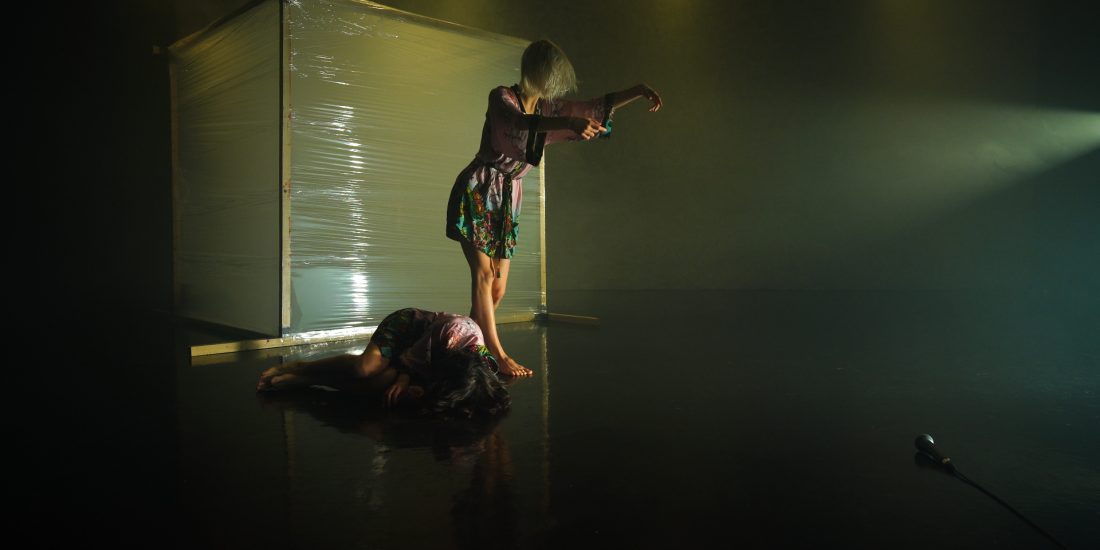
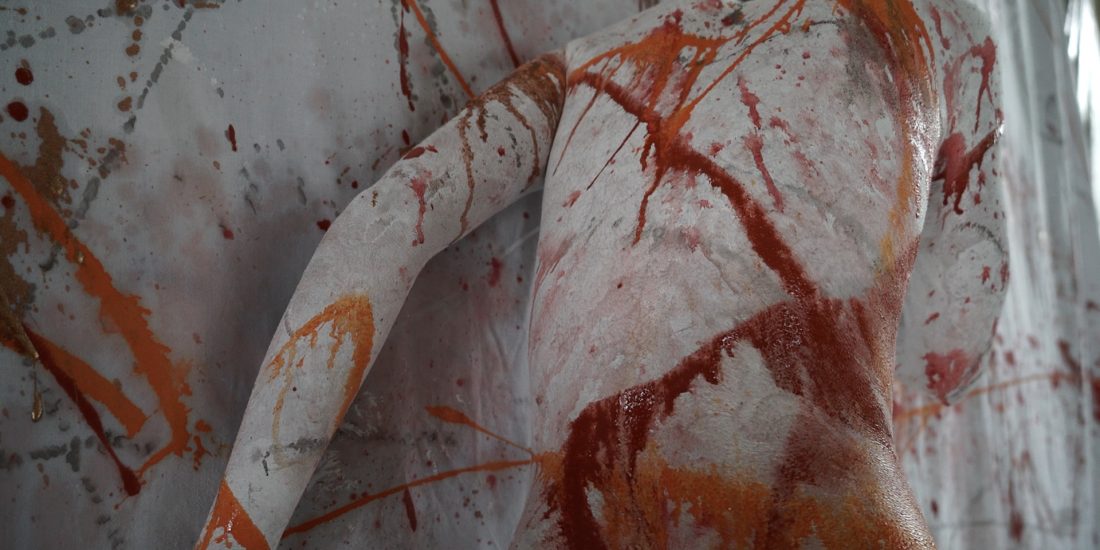
The Artistic Research within the framework of the HUFA Doctoral School [2021 – 2025] is supported by the KDP-2021 Program of the Ministry for Innovation and Technology from the source of the National Research, Development and Innovation Fund.